


By Max Suspension · B2B sourcing and product guides
An original suspension sample can help define mounting geometry and the starting configuration for a new coilover application. It cannot, by itself, establish the vehicle’s full operating requirements, a suitable damper specification or production readiness. Treat sample-based development as an engineering project with staged approval.
For importers and private-label brands, the first task is to send a useful reference package and agree what the manufacturer must deliver from it.
Establish what the sample represents
Identify the vehicle model, chassis, year, market, variant and original suspension option. Record whether the sample is original equipment, an aftermarket replacement or a modified part. Describe its condition and any known damage or wear.
A worn component may still provide useful geometry, but its current behavior should not automatically become the performance target. Similarly, a reference from one variant does not prove that all vehicles with the same model name use the same interfaces.
Confirm that you are entitled to provide the sample and any accompanying drawings for the proposed development. Agree ownership and permitted use of project outputs through the appropriate commercial review rather than assuming that possession of a part resolves those questions.
Prepare a reference package before shipping parts
| Input | Why the development team needs it |
|---|---|
| Vehicle/application record | Defines what the new kit is intended to fit |
| Sample identity and condition | Prevents an unknown or modified part becoming an unexplained baseline |
| Relevant mating parts | Helps identify interfaces that a bare damper may not show |
| Installation-area photos/data | Provides context for mounting and packaging constraints |
| Intended use and product target | Separates geometric replication from performance development |
| Evaluation vehicle access | Establishes how the proposed kit can be validated |
| Expected quantity and market | Supports feasibility and commercial review |
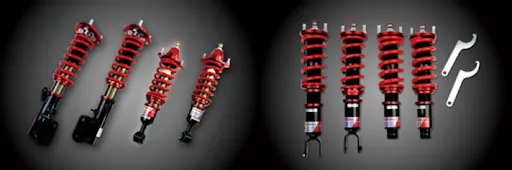
Ask the manufacturer which physical parts are required before dispatch. TEIN’s specialized damper program notes that some applications require original assembled suspension components. This is a useful example of why a complete reference requirement should be agreed case by case; it does not mean every project needs the same parts.
Separate measurement from design approval
The first technical output should identify the interfaces and requirements captured from the reference, together with unresolved questions. Ask how measurements become controlled drawings and which assumptions need vehicle confirmation.
Then agree the proposed product configuration. A changed body length, mounting arrangement, spring or adjustment mechanism is a design decision, not merely a cosmetic copy of the sample. The responsible engineering team should define the evaluation needed before the buyer approves that change.
If an existing platform can be adapted, ask which parts are shared and which are application-specific. The OEM versus ODM comparison helps allocate responsibility for those decisions.
Plan three distinct approval gates
Feasibility: the manufacturer identifies the proposed route, required inputs, major uncertainties and development deliverables. A feasibility response should not be presented as an already validated product.
Prototype: an identified configuration is produced and reviewed against agreed dimensional, functional and application requirements. Qualified personnel should perform vehicle evaluation using the applicable instructions and a suitable test plan.
Production release: the approved configuration is translated into the bill of materials, drawings, work instructions, inspection requirements and packaging record needed for repeat manufacture. Close outstanding prototype substitutions before calling the production version approved.
Use the sample approval checklist to document the second and third gates. Keep a record of which checks must be repeated after each revision.
Define the output, not just the sample fee
The quotation should state what the development work includes: measurement, proposed drawings, prototype quantity, agreed evaluations, revision scope and preparation for production where applicable. Identify separately any tooling, dedicated components or external testing.
Ask what happens if feasibility fails or the first prototype requires a buyer-requested change. Also agree how the original reference will be handled, whether any process may alter it and whether it will be returned. Those decisions are easier to resolve before an irreplaceable sample is shipped.
Build the schedule around decisions
Sample transit, missing vehicle information, prototype revisions and evaluation access can all affect the project sequence. Use a milestone plan rather than applying a standard production duration to a new development program. Our production lead-time guide shows how to separate development, manufacturing and delivery milestones.
Max Suspension offers discussions around sample-based OEM/ODM development. Send the application details, sample photos, intended use and expected quantities first so the required reference package and feasibility scope can be reviewed before shipment.
Cover: AI-generated editorial illustration based on Max Suspension product imagery. Refer to the confirmed specification for actual product details.